
How much does it cost to develop a mobile app in Qatar? The answer depends on what your business needs the application to accomplish. A basic booking app has different requirements from an eCommerce platform, a healthcare application, or an enterprise system that connects multiple departments.
The mobile app development cost in Qatar depends on several factors, including application complexity, platform selection, user interface design, backend infrastructure, third-party integrations, security requirements, and ongoing maintenance. Your choice of development approach also affects the initial investment and the long-term cost of ownership.
Businesses in Doha and across Qatar should evaluate more than the initial development quote. A well-planned application must support its intended users, integrate with existing business systems, and remain reliable as demand grows.
This guide explains the key cost factors, compares development approaches, identifies expenses that businesses often overlook, and outlines practical ways to plan an app development budget.
How Much Does Mobile App Development Cost in Qatar?
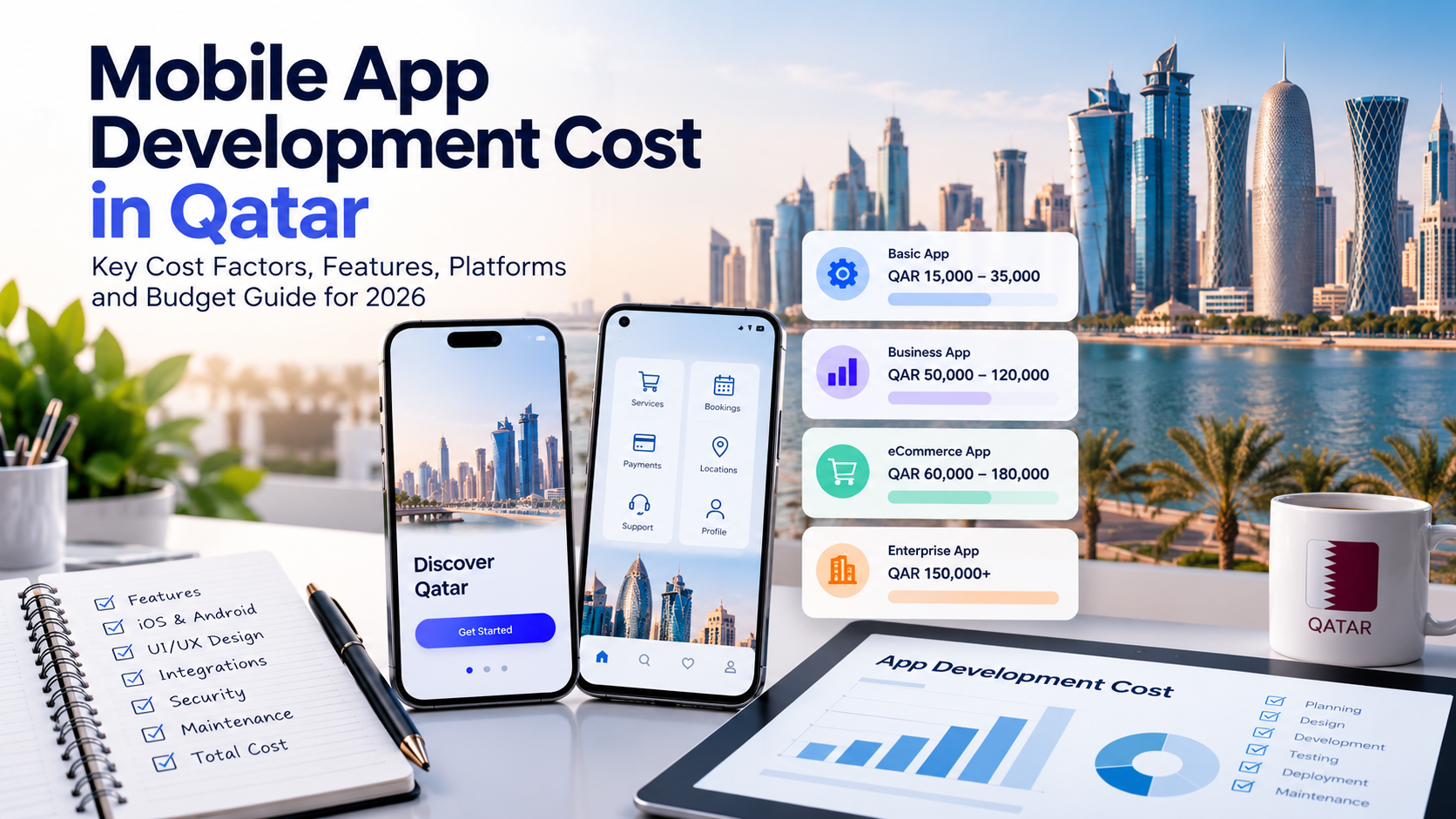
Mobile app development prices vary according to project scope, technical requirements, and the development team’s expertise. Publicly available 2026 pricing guides report substantially different estimates, so businesses should treat general market figures as preliminary budgeting references rather than fixed quotations.
The following table provides illustrative planning ranges, not verified market averages or prices quoted by Inspire Technology.
| App Type | Indicative Budget (QAR) | Typical Scope |
| Basic mobile app | 15,000–35,000 | Simple information screens, contact forms, basic user interactions |
| Minimum viable product (MVP) | 25,000–60,000 | Core features, basic authentication, essential backend functionality |
| Business application | 50,000–120,000 | User accounts, booking workflows, notifications, dashboards, integrations |
| eCommerce application | 60,000–180,000 | Product catalogues, checkout, payment integration, order management |
| Complex or enterprise application | 150,000–400,000+ | Multiple user roles, advanced integrations, extensive workflows, enterprise security |
Actual costs may fall below or exceed these ranges. A simple application with a specialised integration may cost more than a larger informational app. A multi-vendor marketplace or real-time enterprise platform may also require a substantially larger budget.
For an accurate estimate, define the required features, supported platforms, expected user volume, integrations, and post-launch support arrangements before requesting a proposal.
7 Factors That Affect Mobile App Development Cost
1. Application Complexity and Features
Application complexity is one of the main drivers of development cost. Every feature requires some combination of design, development, testing, and ongoing support.
A simple application may contain static information, contact details, and a few interactive screens. A more advanced product may require user authentication, payment processing, booking management, live notifications, location tracking, or personalised recommendations.
Consider a restaurant that wants to launch a mobile app. A menu and contact application requires relatively little functionality. An ordering platform that supports customer accounts, online payments, delivery tracking, loyalty rewards, and restaurant-side order management requires a much broader technical scope.
Create a prioritised feature list before development begins. Separate essential launch features from improvements that can follow once the application has demonstrated business value.
2. iOS vs Android Development
Your choice of mobile platform affects development effort, testing requirements, and long-term maintenance.
iOS app development uses technologies such as Swift and Apple’s development frameworks. It suits businesses that need a dedicated iPhone and iPad experience.
Android app development commonly uses Kotlin and Android’s development tools. It supports a broad range of devices, screen sizes, and hardware configurations.
Building two separate native applications generally requires additional work across development, quality assurance, and platform-specific maintenance.
Businesses should assess their target audience, required device features, performance expectations, and available budget before choosing a platform. Launching on one platform may suit a narrowly defined first release, while other businesses need iOS and Android availability from day one.
3. Native vs Cross-Platform Development
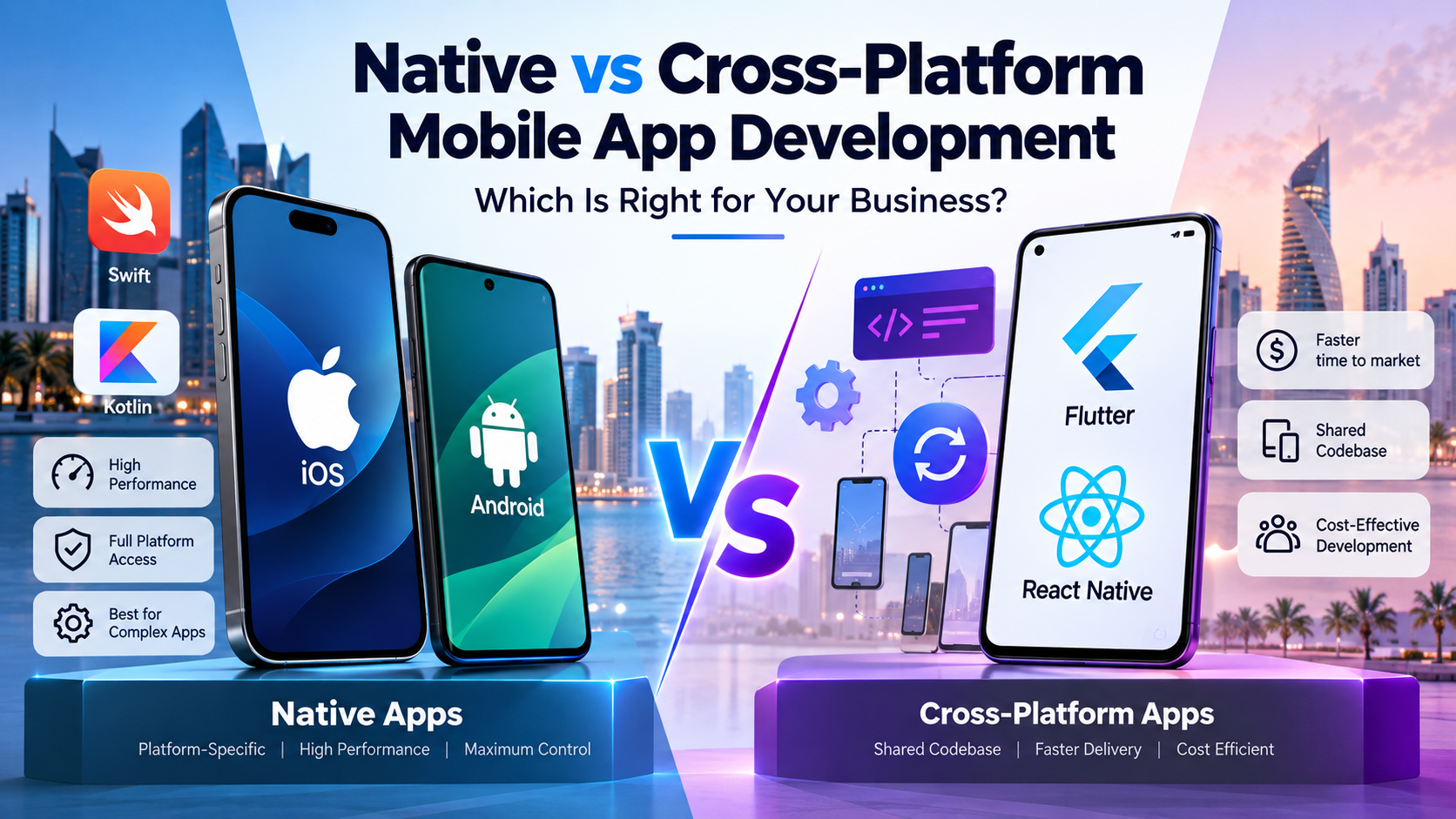
Cross-platform development allows businesses to deliver applications for iOS and Android through a shared codebase. Technologies such as Flutter and React Native can reduce duplicated development work, although savings depend on the application’s requirements.
| Factor | Native Development | Cross-Platform Development |
| Technology | Swift for iOS, Kotlin for Android | Flutter or React Native |
| Codebase | Separate platform-specific implementations | Shared codebase for much of the application |
| Initial development effort | Often higher for two platforms | Often lower for compatible use cases |
| Device integration | Direct access to platform capabilities | May require native modules for specialised features |
| Maintenance | Separate platform updates may be needed | Shared updates can reduce duplicated work |
| Best suited for | Platform-specific performance or functionality | Many business apps targeting both platforms |
Neither approach is automatically the cheapest or best option. A feature-rich application with advanced hardware integration may benefit from native development. A booking, retail, or service application may suit Flutter or React Native.
Read our guide to native vs cross-platform mobile app development to understand the trade-offs before making a decision.
4. UI/UX Design and User Experience
Mobile app design affects more than appearance. User research, information architecture, wireframes, prototypes, accessibility, and usability testing all influence the effort required before and during development.
A straightforward internal application may need a relatively small set of screens. A customer-facing platform with multiple user journeys, personalised dashboards, and complex checkout processes requires more detailed design work.
Businesses in Qatar may also need Arabic and English interfaces. Arabic support requires careful attention to right-to-left layouts, typography, navigation, form alignment, and content expansion.
Teams should validate important user journeys before development begins. Early usability testing can identify confusing workflows and reduce expensive design changes later.
For more guidance, explore our UI/UX design process guide and UI/UX design cost in Qatar.
5. Backend Development and Third-Party Integrations
A mobile app often relies on services that users never see. Backend infrastructure manages authentication, business rules, databases, transactions, notifications, reporting, and communication between systems.
The complexity increases when an application connects to existing business software or external providers.
Common integrations include:
- Payment gateways and transaction processing.
- Customer relationship management (CRM) systems.
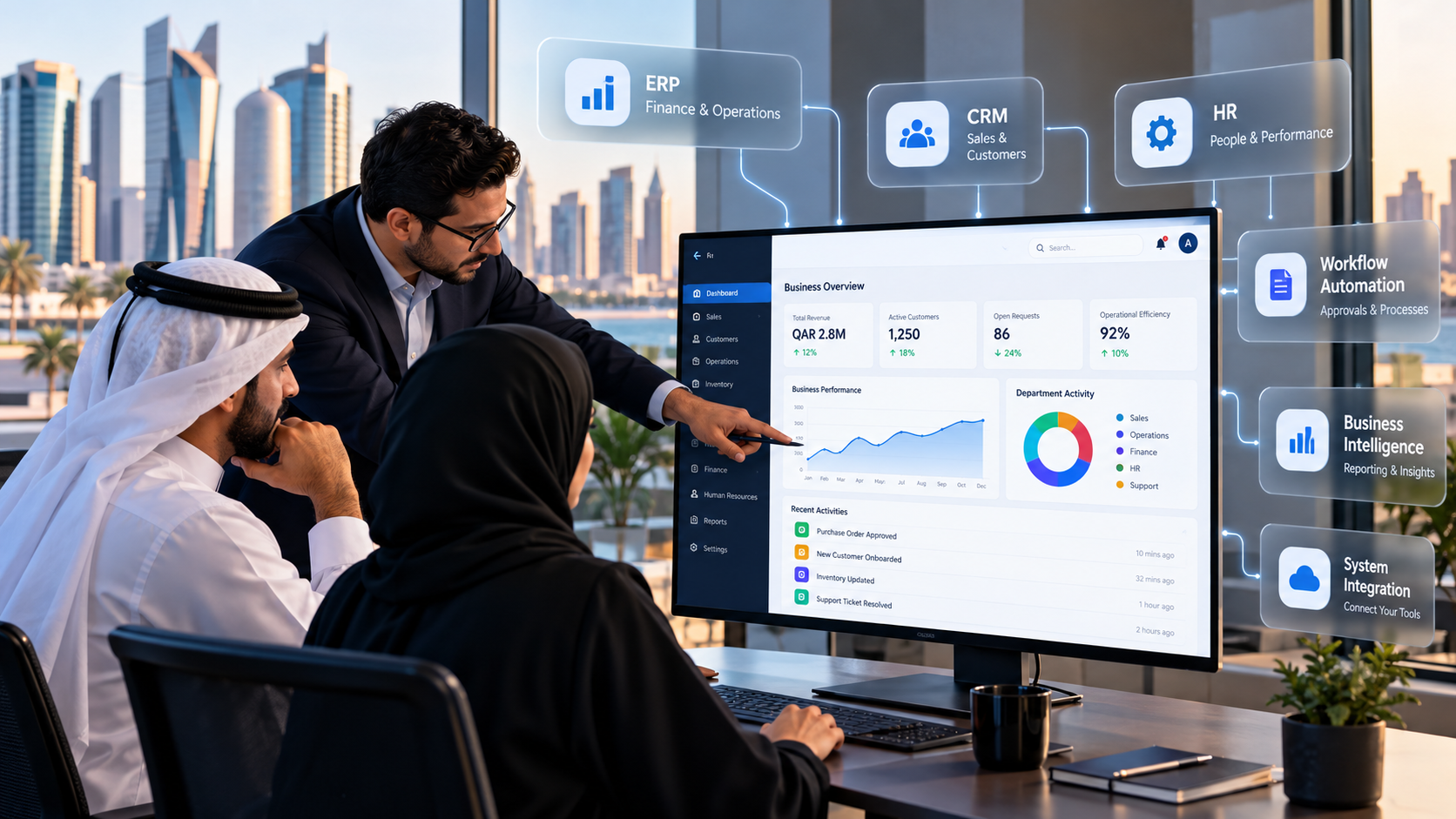
- Enterprise resource planning (ERP) platforms.
- Inventory and order management systems.
- Maps, GPS, and location-based services.
- Push notification and messaging services.
- Analytics, reporting, and customer support tools.
Each integration may require API development, authentication, data mapping, error handling, testing, and ongoing compatibility checks.
A business with established systems should document its integration requirements before requesting a development quote. That step helps the development team identify dependencies and estimate the true project scope.
6. Security, Performance, and Scalability
Security and performance requirements influence architecture, testing, infrastructure, and maintenance costs.
Applications that process personal information, payments, healthcare data, or sensitive business records need appropriate access controls, secure data transmission, data protection measures, and careful testing.
Scalability also matters. An application built for a small internal team may require a different infrastructure design from a consumer platform that expects thousands of concurrent users.
Businesses should assess expected traffic, database size, data retention, backup requirements, recovery procedures, and availability targets. Cloud hosting costs will depend on the selected services and actual usage.
A realistic budget should account for these requirements from the beginning instead of treating security and scalability as optional improvements after launch.
7. Development Team and Project Management
The development team’s structure, experience, and delivery process also affect pricing.
A project may involve business analysts, UI/UX designers, mobile developers, backend engineers, quality assurance specialists, and project managers. Smaller projects may combine several responsibilities within fewer roles.
A reliable proposal should explain the scope, milestones, deliverables, testing process, responsibilities, and change-request policy. Businesses should compare proposals based on what each includes rather than selecting the lowest headline price.
A lower initial quote may exclude essential features, documentation, deployment, or post-launch support. A detailed scope makes those differences easier to identify.
Additional Costs Beyond Initial App Development
The initial build is only one part of the total investment. Businesses should plan for recurring services, platform requirements, updates, and operational support.
| Cost Category | What to Include |
| Hosting and cloud services | Servers, databases, storage, backups, and bandwidth |
| App store accounts | Developer account registration and applicable renewal fees |
| Third-party services | Paid APIs, messaging, maps, analytics, and external platforms |
| Maintenance | Bug fixes, compatibility updates, security patches, and technical support |
| Feature enhancements | New workflows, integrations, reports, and product improvements |
| Quality assurance | Regression testing, device testing, and release validation |
| Marketing and acquisition | App promotion, customer onboarding, and user acquisition campaigns |
For reference, Google Play currently lists a one-time US$25 registration fee for a developer account. Businesses should verify the applicable account requirements and platform terms before launch. Apple’s developer programme and any paid third-party services should be checked separately.
Source: Google Play Console registration guidance.
How Much Does Mobile App Maintenance Cost?
Maintenance costs depend on application complexity, service-level commitments, infrastructure usage, and the frequency of updates.
For preliminary budgeting, some businesses model annual maintenance at around 15–25% of the initial development cost. Treat that percentage as a planning assumption, not a universal industry standard or a guaranteed service price.
For example, an application with an initial development budget of QAR 80,000 would have an illustrative annual maintenance allowance of QAR 12,000–20,000 under that assumption.
The actual amount may be lower for a stable application with limited support requirements or higher for a business-critical platform that needs frequent enhancements, extensive monitoring, and rapid incident response.
Ask your development partner to separate recurring maintenance from hosting, third-party subscriptions, and new feature development. Clear categories make future spending easier to forecast.
How to Reduce App Development Costs Without Sacrificing Quality
Businesses can manage development costs through disciplined planning rather than simply choosing the cheapest supplier.
Start With a Minimum Viable Product
A minimum viable product (MVP) focuses on the essential functionality required to test a business idea or solve a specific problem.
For example, a booking app may launch with service listings, appointment scheduling, customer accounts, and confirmations. Advanced loyalty programmes and personalised recommendations can follow after the business evaluates user feedback.
An MVP helps teams control scope and validate assumptions before committing to a larger investment.
Prioritise Features by Business Value
Classify each feature as essential, useful, or optional. Estimate the effort required for each item and identify which features directly support customer needs or operational goals.
Avoid adding complex functionality simply because competitors offer it. A feature should have a clear purpose, an identified user, and a measurable business benefit.
Choose the Right Technology Stack
Select a technology stack that matches the required functionality, internal capabilities, and expected growth.
Flutter or React Native may suit many cross-platform projects. Native development may be more appropriate when an application depends on specialised platform capabilities.
The right decision should account for total development and maintenance effort rather than initial coding costs alone.
Finalise Requirements Before Development
Frequent changes to requirements can increase development time, testing effort, and project costs.
Document user journeys, integrations, permissions, reporting needs, and acceptance criteria before implementation. Use prototypes to resolve important design decisions early.
A phased delivery plan also helps businesses review progress, validate functionality, and manage changes in a controlled way.
Plan for Maintenance From Day One
Choose a support model that covers essential security updates, compatibility fixes, backups, monitoring, and incident response.
A well-maintained application is easier to adapt as operating systems, third-party services, and customer expectations change.
How to Estimate Your Mobile App Development Budget
A practical estimate starts with business requirements rather than an arbitrary spending limit.
Follow these steps before requesting proposals:
- Define the business objective. Identify the problem the app must solve and the outcomes you expect.
- Identify your users. List customer types, staff roles, administrators, and their core journeys.
- Choose the platforms. Decide whether you need iOS, Android, or both.
- Document essential features. Include authentication, payments, dashboards, notifications, and integrations where relevant.
- Specify language and localisation needs. Include Arabic and English support if your audience requires both.
- Estimate operational requirements. Define expected usage, security needs, hosting, backups, and availability.
- Budget for the full lifecycle. Include design, development, testing, deployment, maintenance, and third-party services.
- Request a scoped proposal. Ask for itemised deliverables, assumptions, exclusions, milestones, and support terms.
A detailed requirements document gives development teams a stronger basis for estimating cost and helps your business compare proposals consistently.
Why Businesses in Qatar Choose Custom Mobile App Development
Custom mobile applications allow businesses to build digital experiences around their operations, customer journeys, and long-term objectives.
For retailers, an app can connect product discovery, orders, inventory, and customer engagement. Service businesses can manage appointments and customer communication. Logistics teams can improve visibility across deliveries and field operations. Enterprise organisations can connect employees with internal workflows and business data.
Businesses in Doha and across Qatar may also need bilingual interfaces, regional payment integrations, and workflows that reflect local operating requirements.
Inspire Technology provides mobile app development services for businesses that need custom iOS, Android, and cross-platform applications. Our approach covers requirements discovery, technical architecture, UI/UX design, development, integration, quality assurance, deployment, and ongoing support.
The right solution depends on your business goals, users, technical requirements, and available budget. A clear development plan helps align those elements before implementation begins.
Frequently Asked Questions
What is the average mobile app development cost in Qatar?
There is no single verified average that applies to every project. A basic application may require a budget in the tens of thousands of Qatari riyals, while advanced eCommerce, multi-role, and enterprise applications can cost substantially more. The final estimate depends on scope, platforms, integrations, and support requirements.
Is iOS app development more expensive than Android app development?
Neither platform is automatically more expensive. The cost depends on functionality, device requirements, design, testing, and the team’s technology expertise. Building separate native applications for both platforms generally requires more work than developing for one platform.
Is cross-platform app development cheaper?
Cross-platform development can reduce duplicated work because teams share much of the codebase across iOS and Android. However, specialised device integrations, platform-specific features, and additional testing can affect the final cost.
How long does it take to develop a mobile app?
A simple application may take several weeks, while a feature-rich business app can take several months. Complex enterprise applications may require longer timelines due to integrations, security requirements, testing, and stakeholder approvals.
What is included in a mobile app development quote?
A quote may include requirements analysis, design, development, backend functionality, testing, deployment, and documentation. The exact scope varies by provider. Confirm whether hosting, third-party subscriptions, app store fees, maintenance, and future enhancements are included.
Do businesses in Qatar need Arabic and English app support?
Bilingual support is useful when a business serves Arabic- and English-speaking users. The scope may include translated content, right-to-left layouts, language selection, and interface testing. Requirements should be defined during the design stage to avoid costly changes later.
How can I reduce mobile app development costs?
Start with essential features, choose an appropriate technology stack, document requirements, and release the product in phases. Prioritise features that support business objectives and budget for maintenance from the beginning.
How do I get an accurate mobile app development quote in Qatar?
Prepare a brief covering your business objectives, target users, required features, supported platforms, integrations, language requirements, and expected launch timeline. A development team can use that information to define the scope and prepare a more reliable estimate.
Plan Your Mobile App Development Project With Inspire Technology
The cost of mobile app development in Qatar depends on the product you want to build and the outcomes it must deliver. A clear scope, suitable technology stack, realistic budget, and reliable maintenance plan help you make informed decisions before development begins.
Inspire Technology works with businesses to plan and develop mobile applications around their operational needs, user expectations, and growth objectives.
Planning a mobile app for your business? Explore our mobile app development services in Qatar to discuss your requirements and request a project-specific estimate.